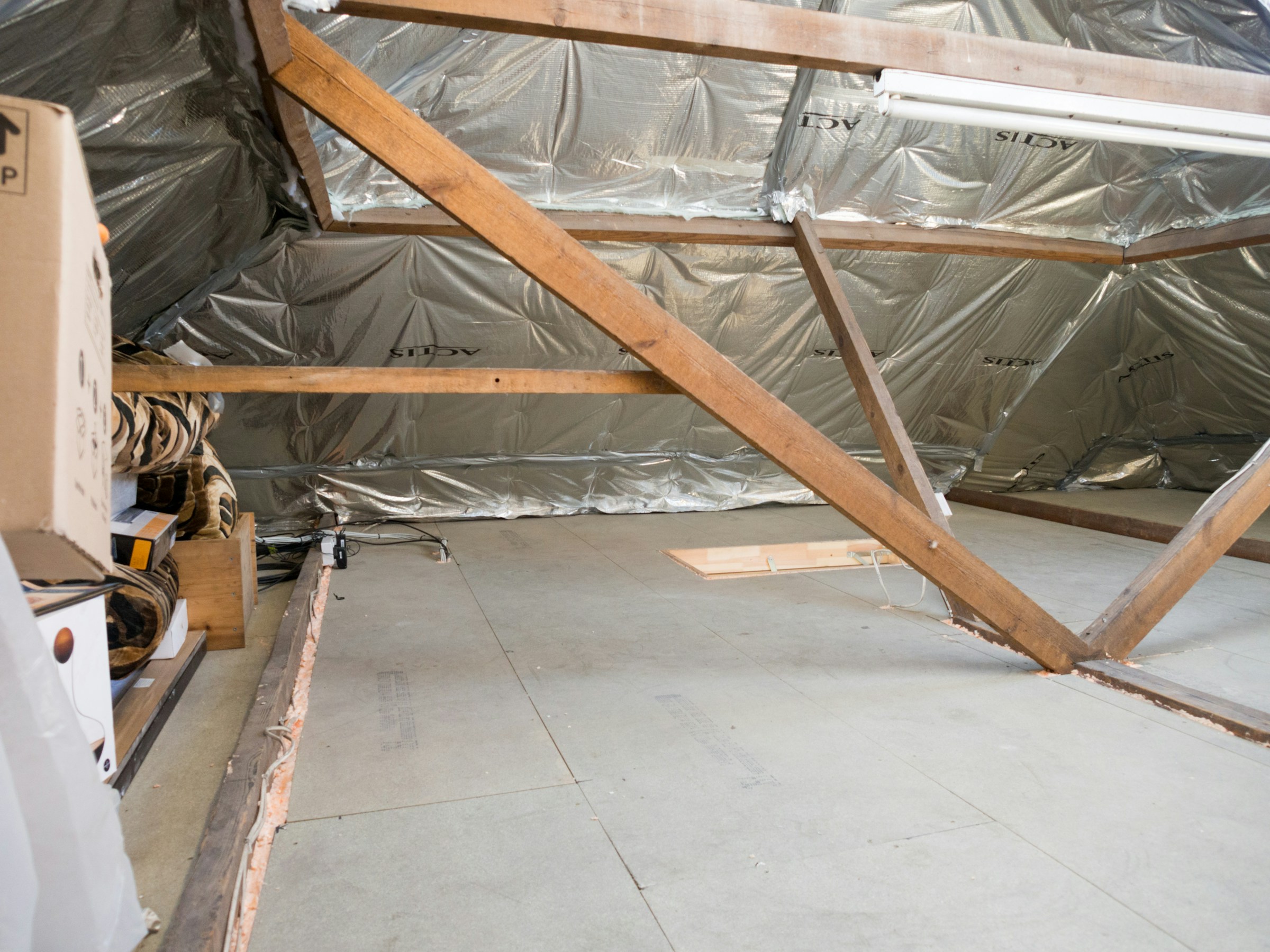
Compare attic insulation quotes by the work included, not just the total price. Ask each contractor to identify the area being treated, existing conditions, proposed material and R-value, preparation, removal, and exclusions. A lower price is useful only when you understand what it covers.
Are both quotes covering the same attic?
Start by asking each contractor to describe the same project. The square footage of your house may differ from the attic area included in a proposal. An attached garage, addition, sloped ceiling, or inaccessible section can change the boundaries. Ask for the measured treatment area and a plain-language explanation of any spaces left out.
For example, one proposal might cover the accessible attic floor above the main living area while another includes an addition and attic access hatch. Those are different scopes even if both are labeled “attic insulation.” Write down your priority rooms and ask where the proposed work connects to them.
In a Houston home with an uncomfortable upstairs room, describe when the problem occurs and whether it affects one room or the whole floor. That information helps frame the assessment; it does not establish that insulation is the only cause. Keep the written scope tied to observations rather than an assumed diagnosis.
What material and performance are proposed?
A material name alone is incomplete. Ask for the product, installation location, planned thickness or coverage, and intended final R-value where applicable. Also ask whether the stated R-value describes the added material or the proposed total assembly. These details make proposals easier to compare without guessing from bag counts or inches alone.
R-value measures resistance to heat flow. ENERGY STAR publishes recommended insulation R-values by climate zone and existing conditions. Ask how the recommendation applies to your home; a general recommendation is not a substitute for confirming the requirements of your particular project.
If one quote proposes attic-floor insulation and another proposes spray foam at the roofline, request an explanation of the different approaches. Do not treat them as interchangeable layers. Our material comparison guide explains the questions that help distinguish these options.
Which preparation and removal items are included?
Ask whether the price includes evaluating existing material, moving or protecting stored belongings, keeping access usable, and cleaning the work area afterward. If removal is recommended, ask which areas need it and why. Request separate descriptions of removal and new installation so you can understand the reasoning.
Air sealing also deserves its own line in the conversation. ENERGY STAR recommends addressing attic air leaks before adding insulation in its attic insulation guidance. Ask whether any air sealing is included, which locations it covers, and whether additional trades need to resolve an issue first. Do not assume an insulation quote includes duct repair, electrical work, or roof repair.
Ask how the proposed work will accommodate existing ventilation paths, equipment, and required access. If the assessment identifies a leak or an unresolved condition, have the contractor explain the sequence of repairs before installation. The repair or replacement guide can help you discuss whether existing material should stay.
Use a written comparison checklist
| Item | What the proposal should clarify |
|---|---|
| Coverage | Measured area, included spaces, and inaccessible sections. |
| Material | Product, installation location, and intended performance. |
| Existing insulation | What stays, what is removed, and the reason. |
| Preparation | Access, protection, air sealing if included, and prerequisites. |
| Completion | Cleanup, documentation, schedule, and written exclusions. |
Send the same questions to each contractor. If an answer changes the scope, request a revised written estimate rather than relying on a verbal explanation. A clear comparison sheet is particularly useful when several people in the household are deciding together.
Why can attic insulation prices differ?
Area, access, material choice, preparation, removal, and disposal can all change the amount of work being proposed. Difficult access or multiple separate attic sections may require a different plan from an open, accessible space. A quote should explain the project-specific factors instead of asking you to rely on a generic cost per square foot.
Ask how unexpected conditions will be handled. Will work pause for your approval? How will an additional charge be documented? Confirm payment terms, the estimated work window, and any warranty terms in writing. Do not assume that a verbal schedule or a brochure benefit is part of the agreement.
Common mistakes include choosing solely by price, comparing different coverage areas, treating all preparation as included, and expecting a particular utility-bill reduction. Weather, thermostat settings, equipment, and the rest of the house affect energy use. The useful outcome is a defined scope you can review and understand.
Request an estimate that answers your questions
FV Insulation provides attic and ceiling insulation services for Houston homeowners. Share your location, comfort concerns, known insulation history, and any existing estimate you would like to discuss. Ask for the proposed work to be explained in terms of your home and priorities.
Request a quote or consultation to discuss the next step. The team follows up to agree on a time; sending an inquiry does not reserve an appointment.
Common questions
Should I get more than one attic insulation quote?
Comparing written proposals can help you understand different recommendations. Give each contractor the same project description and compare scope, products, preparation, exclusions, and terms before comparing totals.
Does a quote always include removing old insulation?
No. Removal needs to be stated explicitly. Ask which material would be removed, why removal is recommended, and whether disposal and cleanup are included.
Can I compare quotes by R-value alone?
No. R-value is one detail. The location, coverage, condition of existing insulation, installation approach, and included preparation also matter.
Can FV Insulation quote from photos alone?
Photos can start the conversation, but ask the team what assessment is needed before confirming scope and price. Do not enter an unsafe attic to obtain pictures.
Sources
Technical background for this guide. Product instructions and the conditions of your home determine the appropriate installation.