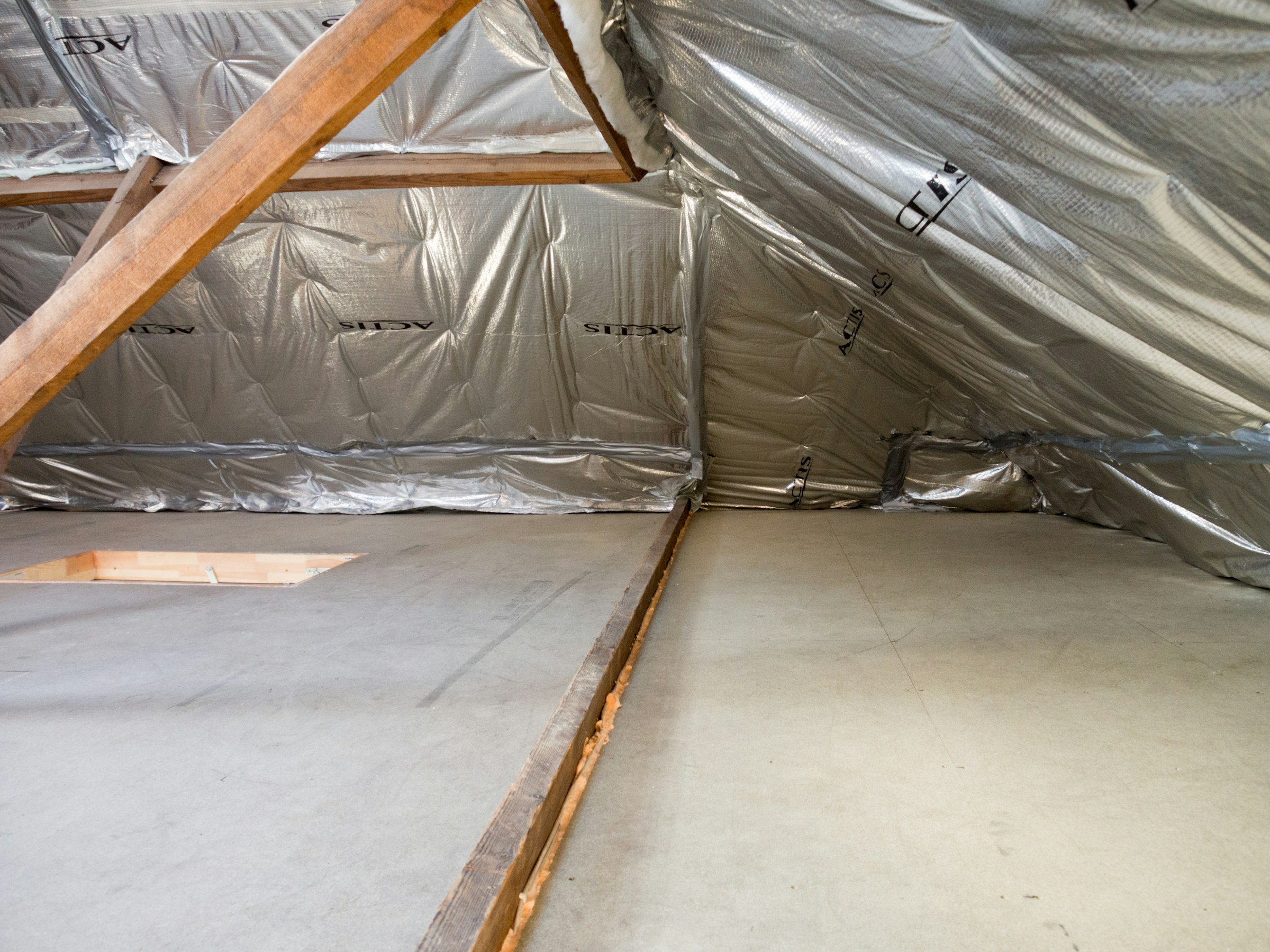
A radiant barrier reduces radiant heat transfer within an appropriate attic assembly; it does not replace the role of conventional attic-floor insulation. Before choosing one for a Houston home, ask about the product, installation location, required air space, existing insulation, and how the proposal fits the attic as a whole.
How is a radiant barrier different from insulation?
Conventional insulation and reflective heat control address different parts of heat transfer. A radiant barrier uses a reflective surface adjacent to an air space to reduce radiant heat exchange. That makes its placement part of its function, rather than a cosmetic choice. See the Department of Energy’s overview of insulation types.
This distinction matters when comparing proposals. Adding material at the attic floor, applying foam at the roofline, and installing a radiant barrier are not interchangeable tasks. Ask the contractor to describe which problem each proposed item addresses and what other parts of the attic remain unchanged.
A shiny roof surface in a photograph may be part of a different product or assembly. Use the actual proposed product documentation when evaluating a quote.
Why discuss the whole attic in a hot climate?
Houston homeowners often begin with a simple concern: rooms become uncomfortable during hot weather. That is a useful starting point, but an attic proposal should connect the roof, insulation, access, and any relevant equipment conditions. A single product cannot be evaluated sensibly without knowing what is already there.
Building America’s attic heat-gain guidance discusses air sealing, insulation, and ventilation as related considerations. Ask which conditions were assessed and which tasks are included. Do not assume a radiant barrier quote also includes sealing ceiling leaks, correcting missing insulation, or repairing ducts.
Share whether the attic is accessible, whether previous work has changed it, and whether there are known leaks or moisture concerns. These details help the team decide what needs further assessment before selecting an installation approach.
What should the proposal say about placement?
Ask for the exact product and where it would be installed. The explanation should identify the reflective surface, the adjacent air space, and how the layout fits the existing structure. “Radiant barrier throughout attic” is not enough detail to compare two proposals.
The Building America installation guide discusses roof-related locations and notes that dust accumulation can affect sheet products laid horizontally. Ask how the proposed placement follows the manufacturer’s instructions and how the product will remain suitable for that location.
Also ask how ventilation paths, equipment access, and future maintenance will be accommodated. A roof assembly can have multiple layers and functions, so request an explanation of how the new material fits with existing moisture management. Do not choose perforations, fastening, or vapor-control details from a generic online example.
Should existing attic insulation be improved first?
Ask about the condition and coverage of insulation at the current boundary between the home and attic. If material is missing or damaged, the contractor should explain how that affects the overall recommendation. A radiant barrier should not become a reason to leave the rest of the assessment incomplete.
Our repair, addition, or replacement guide explains how to discuss existing material without assuming that age alone requires removal. If multiple improvements are recommended, ask for each to be described separately so you can understand their purpose and sequence.
Budget decisions are easier when you know the base scope and alternatives. Ask which work is necessary to carry out the proposed installation and which items are optional improvements. A clear explanation is more useful than combining all benefits into a single advertised outcome.
Compare the proposal without relying on savings promises
- What product is proposed, and where will it go?
- How does the reflective surface face an air space?
- What existing insulation was assessed?
- How are ventilation and maintenance access accommodated?
- What preparation, cleanup, and exclusions are written into the estimate?
Ask how any claimed benefit relates to your home. A change in attic conditions is not the same measurement as a change in your entire electricity bill. Weather, equipment, occupancy, and the rest of the building influence energy use, so avoid treating a promotional percentage as your expected result.
Common mistakes include comparing products by shininess, assuming all foil-faced assemblies are the same, and treating a radiant barrier as a replacement for conventional insulation. Our material comparison guide can help keep those roles clear.
FV Insulation can discuss radiant barrier options within its insulation services. Request a consultation with your attic concerns and location. The team follows up to agree on the next step.
Common questions
Is a radiant barrier the same as fiberglass or cellulose?
No. A radiant barrier addresses radiant heat transfer using a reflective surface and air space. Fiberglass and cellulose serve as conventional insulation in suitable applications.
Does a radiant barrier need an air space?
Yes, the reflective surface needs to face an air space to function as intended. Ask how the proposed assembly follows the product’s installation instructions.
Will it guarantee lower electricity bills?
No specific reduction should be assumed. The result depends on the home, existing conditions, installation, equipment, weather, and usage.
Can I identify a suitable radiant barrier from a roof photo?
No. Foil-faced products can belong to different assemblies. Confirm the actual product, intended use, and installation details rather than relying on appearance.
Sources
Technical background for this guide. Product instructions and the conditions of your home determine the appropriate installation.